The Unity Beneath Our Differences
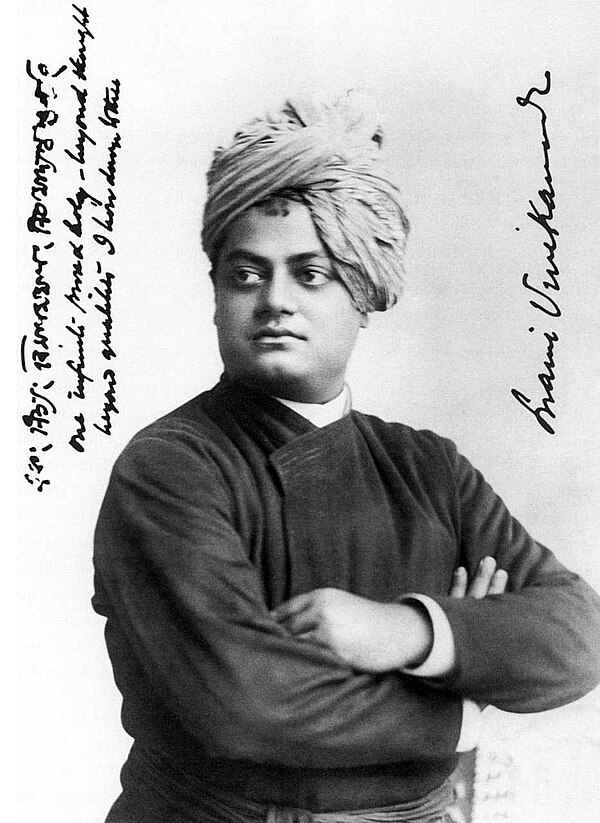
Swami Vivekananda's assertion that "All differences in this world are of degree, and not of kind, because oneness is the secret of everything" invites us to reconsider the nature of our existence. At its core, this quote challenges the divisive narratives that often dominate our social and personal landscapes. It urges us to recognize that beneath the myriad distinctions that separate us—be they cultural, ideological, or personal—lies a profound unity that connects all beings. This understanding is not merely philosophical; it holds the potential to transform our interactions and perceptions in a world rife with conflict.
In a time when polarization seems to be the norm, Vivekananda's words resonate with a deep urgency. They remind us that the essence of our being is not found in the superficial differences that often define our identities, but rather in the shared consciousness that binds us. This perspective invites a shift from a mindset of separation to one of inclusion, fostering compassion and empathy. Embracing this oneness can lead to a more harmonious existence, both individually and collectively, as we learn to navigate the complexities of our diverse world.
The image / the metaphor
The imagery in Vivekananda's quote evokes a landscape where differences are not stark contrasts but subtle variations on a common theme. The phrase "differences in this world are of degree" suggests a gradient rather than a binary, a spectrum where each hue contributes to the richness of the whole. This metaphor of degrees implies that while we may appear distinct, our essence is fundamentally the same, akin to the various shades of a color that, when blended, create a unified vision. The choice of the word "oneness" as the secret of everything encapsulates a profound truth: that the underlying fabric of existence is interwoven with threads of unity.
Diving deeper into this metaphor, we can see that the notion of oneness transcends mere philosophical abstraction; it is a lived reality that can be experienced in moments of connection and understanding. When we encounter another person, we often focus on their differences—be it their beliefs, backgrounds, or choices. However, if we shift our perspective to recognize the shared humanity that exists beneath these differences, we begin to see the world not as a collection of isolated entities but as a vibrant tapestry of interconnected lives. This realization can foster a sense of belonging and community, reminding us that we are all part of a greater whole.
In the speaker's tradition
Swami Vivekananda's teachings are deeply rooted in the Hindu tradition, which emphasizes concepts such as dharma (righteous duty), bhakti (devotion), and the interconnectedness of all beings. The idea of oneness is echoed in various Hindu texts, where the ultimate reality, often referred to as Brahman, is seen as the source of all existence. This perspective aligns with the concept of sunyata in Buddhism, which speaks to the emptiness of inherent existence, suggesting that all forms are interdependent and transient. By recognizing that our differences are merely degrees of the same essence, we align ourselves with the fundamental truths of both Hindu and Buddhist philosophies.
In the Bhagavad Gita, Lord Krishna imparts wisdom on the nature of the self, emphasizing that the true self (Atman) is eternal and unchanging, while the physical body and mind are subject to change. This teaching resonates with Vivekananda's assertion, as it highlights the distinction between our temporary identities and our eternal essence. When we grasp this truth, we can begin to see beyond the superficial differences that often lead to conflict and division, embracing instead the unity that lies at the heart of our existence.
Living the teaching
Consider a modern scenario where this teaching can be applied: a workplace environment filled with diverse individuals from various backgrounds. Conflicts may arise due to differing opinions, work styles, or cultural practices. However, if team members can recognize that their differences are merely degrees of a shared goal—success and collaboration—they can foster an atmosphere of understanding and cooperation. By focusing on their common purpose, they can transcend the barriers that separate them, creating a more cohesive and productive team dynamic.
Another application of this teaching can be found in personal relationships, particularly during moments of disagreement. When faced with conflict, it is easy to become entrenched in our positions, viewing the other as an adversary. However, if we remember Vivekananda's insight, we can approach these situations with a mindset of curiosity and compassion. By seeking to understand the underlying motivations and feelings of the other person, we can bridge the gap between our differences, fostering deeper connections and healing in our relationships.
A reflection
As we contemplate Vivekananda's profound statement, we are invited to reflect on our own perceptions of difference and unity. How often do we allow the distinctions between ourselves and others to cloud our understanding of our shared humanity? In what ways can we cultivate a sense of oneness in our daily interactions, recognizing that beneath our varying degrees of experience lies a common essence? This contemplation can serve as a guiding light, encouraging us to embrace the unity that is the foundation of our existence.