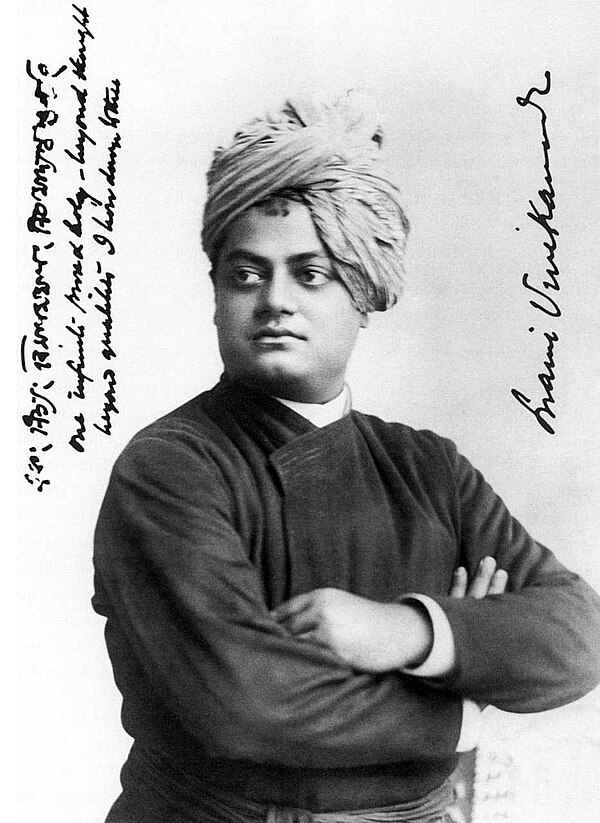
The Power of Focused Thought: Manifestation in Action
Swami Vivekananda's assertion that "when an idea exclusively occupies the mind, it is transformed into an actual physical or mental state" invites us to reflect on the profound relationship between thought and reality. This statement underscores the transformative power of focused intention, suggesting that our mental landscapes shape our experiences and actions. In a world often distracted by myriad stimuli, this teaching serves as a reminder of the importance of cultivating a concentrated mind, one that can manifest its visions into tangible outcomes.
Delving deeper, we recognize that Vivekananda's insight is not merely about the act of thinking; it is about the quality and exclusivity of that thought. When an idea takes root in our consciousness, it begins to influence our emotions, behaviors, and ultimately, our reality. This process of manifestation is not a passive occurrence but an active engagement with the world, where our thoughts become the architects of our experiences. Understanding this dynamic can empower us to harness our mental energies more effectively, guiding us toward our aspirations and desires.
The image / the metaphor
The imagery in Vivekananda's quote evokes a sense of transformation, where the mind acts as a crucible for ideas. The verbs "occupies" and "transformed" suggest a dynamic interplay between thought and existence, emphasizing that ideas are not static but rather living entities that evolve and shape our reality. This metaphor of the mind as a fertile ground for ideas to grow illustrates the potential for creativity and change inherent in focused thought.
Going deeper, we can see that this transformation is akin to the process of alchemy, where base materials are transmuted into gold. In this context, the mind is the alchemist, capable of turning abstract ideas into concrete realities. The act of concentrating on a singular thought can be likened to a laser beam, cutting through the distractions of life to illuminate a path forward. This metaphor serves as a powerful reminder of the potential we hold within ourselves to shape our destinies through the clarity and intensity of our thoughts.
In the speaker's tradition
Swami Vivekananda's teachings are deeply rooted in the Hindu tradition, particularly in the philosophy of Raja Yoga, which emphasizes the control of the mind as a means to attain higher states of consciousness. Concepts such as dharma, or one's duty, and prajna, or wisdom, are integral to understanding how focused thought can align with one's life purpose. In this framework, the mind is not merely a tool for personal gain but a sacred instrument that can facilitate spiritual growth and self-realization.
Moreover, this idea resonates with the teachings found in the Bhagavad Gita, where Lord Krishna advises Arjuna to focus his mind on his duty without attachment to the fruits of his actions. This alignment of thought and action reflects the essence of Vivekananda's quote, illustrating that when we concentrate our minds on our dharma, we can manifest our highest potential. The Gita's emphasis on disciplined thought and action serves as a timeless guide for those seeking to navigate the complexities of life with clarity and purpose.
Living the teaching
Consider a modern scenario where an individual aspires to change their career path. By allowing the idea of a new vocation to occupy their mind exclusively, they begin to take actionable steps toward that goal. This might involve researching the field, networking with professionals, or acquiring new skills. As their thoughts crystallize around this singular ambition, they find that opportunities begin to manifest, aligning with their focused intention. This illustrates how the mind's concentrated energy can catalyze real-world changes, transforming aspirations into reality.
In a different context, think about relationships. When one partner is preoccupied with negative thoughts about the other, this mental state can create tension and conflict. Conversely, if one chooses to focus on the positive attributes and shared experiences, this exclusive attention can foster a deeper connection and understanding. By consciously directing our thoughts toward what we wish to cultivate in our relationships, we can manifest a more harmonious and fulfilling bond. This practice of mindful focus not only enhances personal connections but also enriches our overall experience of life.
A reflection
As we contemplate Vivekananda's profound insight, we are invited to consider the nature of our own thoughts. What ideas currently occupy your mind, and how are they shaping your reality? This question encourages a moment of introspection, prompting us to evaluate whether our mental focus aligns with our deepest aspirations or if it is mired in distractions. In this reflection lies the potential for transformation, as we recognize the power we hold to manifest our intentions through the clarity of our thoughts.




Join the BrightStar Community
Stay connected with daily inspiration, event announcements, and community wisdom