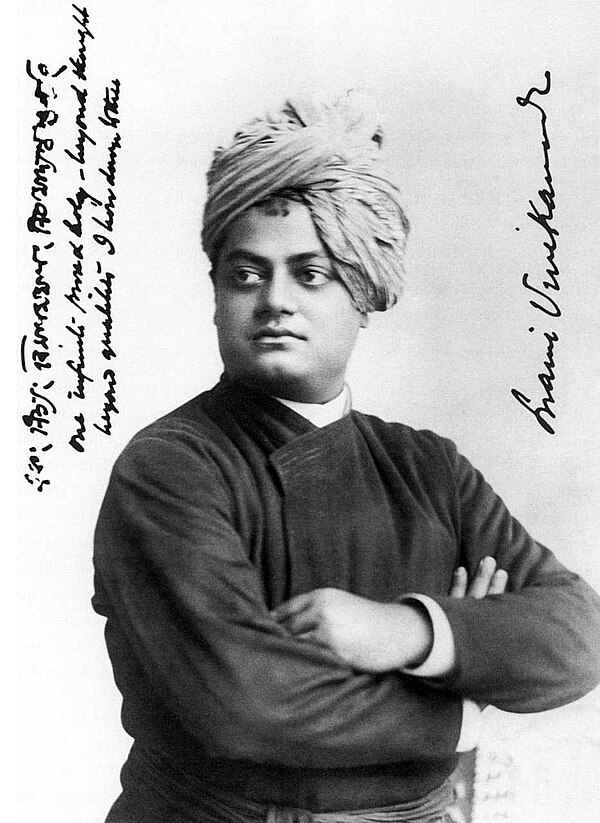
The Essence of Greatness: A Contemplation on Swami Vivekananda's Wisdom
Swami Vivekananda's assertion that "three things are necessary to make every man great, every nation great" invites us to reflect on the foundational qualities that elevate both individuals and societies. He emphasizes the importance of a deep conviction in the power of goodness, the absence of jealousy and suspicion, and the commitment to assist those striving for goodness. This triad not only serves as a blueprint for personal development but also as a guiding principle for collective progress, underscoring the interconnectedness of individual character and societal health.
In a world often marred by division and distrust, Vivekananda's words resonate with a profound urgency. The call to cultivate goodness, to release the grip of jealousy, and to extend a hand to others embodies a vision of humanity that transcends mere coexistence. It challenges us to engage in a transformative journey, both inwardly and outwardly, where the elevation of self is intricately linked to the upliftment of others. This teaching is not merely aspirational; it is a practical framework for living a life of purpose and integrity.
The image / the metaphor
At the heart of Vivekananda's quote lies a vivid imagery that encapsulates the essence of greatness. The term "conviction of the powers of goodness" evokes a sense of unwavering belief, a steadfast faith in the inherent potential for goodness that resides within every individual. This conviction acts as a beacon, guiding actions and decisions, illuminating the path toward a life of virtue. The absence of "jealousy and suspicion" paints a picture of a harmonious existence, where trust and openness flourish, allowing for genuine connections and collaborative efforts.
Delving deeper into the metaphor, we can see that these three elements—conviction, absence of jealousy, and a spirit of helping—are interdependent. They form a triad that supports the structure of greatness. The image of a tree comes to mind, where conviction serves as the roots, grounding us in our values; the absence of jealousy and suspicion represents the trunk, providing strength and stability; and the act of helping others symbolizes the branches, reaching out to nurture and support the growth of a community. Together, they create a flourishing ecosystem of greatness.
In the speaker's tradition
Swami Vivekananda's teachings are deeply rooted in the Hindu tradition, which emphasizes the concepts of dharma, or righteous duty, and the interconnectedness of all beings. The notion of conviction in goodness aligns with the principle of satya, or truth, which is foundational in Hindu philosophy. By advocating for the absence of jealousy and suspicion, Vivekananda echoes the teachings of ahimsa, or non-violence, which encourages compassion and understanding as essential qualities for personal and societal growth.
In the Bhagavad Gita, a seminal text in Hindu philosophy, the idea of selfless action is paramount. Krishna advises Arjuna to perform his duty without attachment to the fruits of his actions, embodying the spirit of helping others without the burden of jealousy or suspicion. This aligns seamlessly with Vivekananda's call to assist those striving for goodness, reinforcing the idea that true greatness is achieved through selfless service and a commitment to the welfare of others.
Living the teaching
Consider a modern scenario where this teaching finds relevance: a workplace environment fraught with competition and rivalry. In such a setting, the cultivation of a conviction in goodness can transform the atmosphere. By fostering a culture of support and collaboration, individuals can rise above jealousy and suspicion, creating a space where everyone is encouraged to contribute their best. This shift not only enhances productivity but also nurtures a sense of belonging and mutual respect among colleagues.
On a more personal level, imagine a relationship strained by misunderstandings and unspoken grievances. Applying Vivekananda's wisdom here means consciously choosing to let go of jealousy and suspicion, opting instead for open communication and empathy. By actively helping each other grow and pursue goodness—whether through encouragement, understanding, or shared experiences—the relationship can evolve into a partnership characterized by trust and mutual upliftment. This practice of embodying the triad of greatness in our daily interactions can lead to profound transformations in our lives.
A reflection
As we contemplate Swami Vivekananda's profound insights, we are invited to reflect on our own lives: How can we cultivate a deeper conviction in the power of goodness within ourselves and our communities? In what ways can we actively eliminate jealousy and suspicion from our thoughts and actions? These questions serve as a compass, guiding us toward a life of integrity and service, where our personal greatness contributes to the collective elevation of humanity.




Join the BrightStar Community
Stay connected with daily inspiration, event announcements, and community wisdom